
The Journey to a Carbon-Neutral Economy
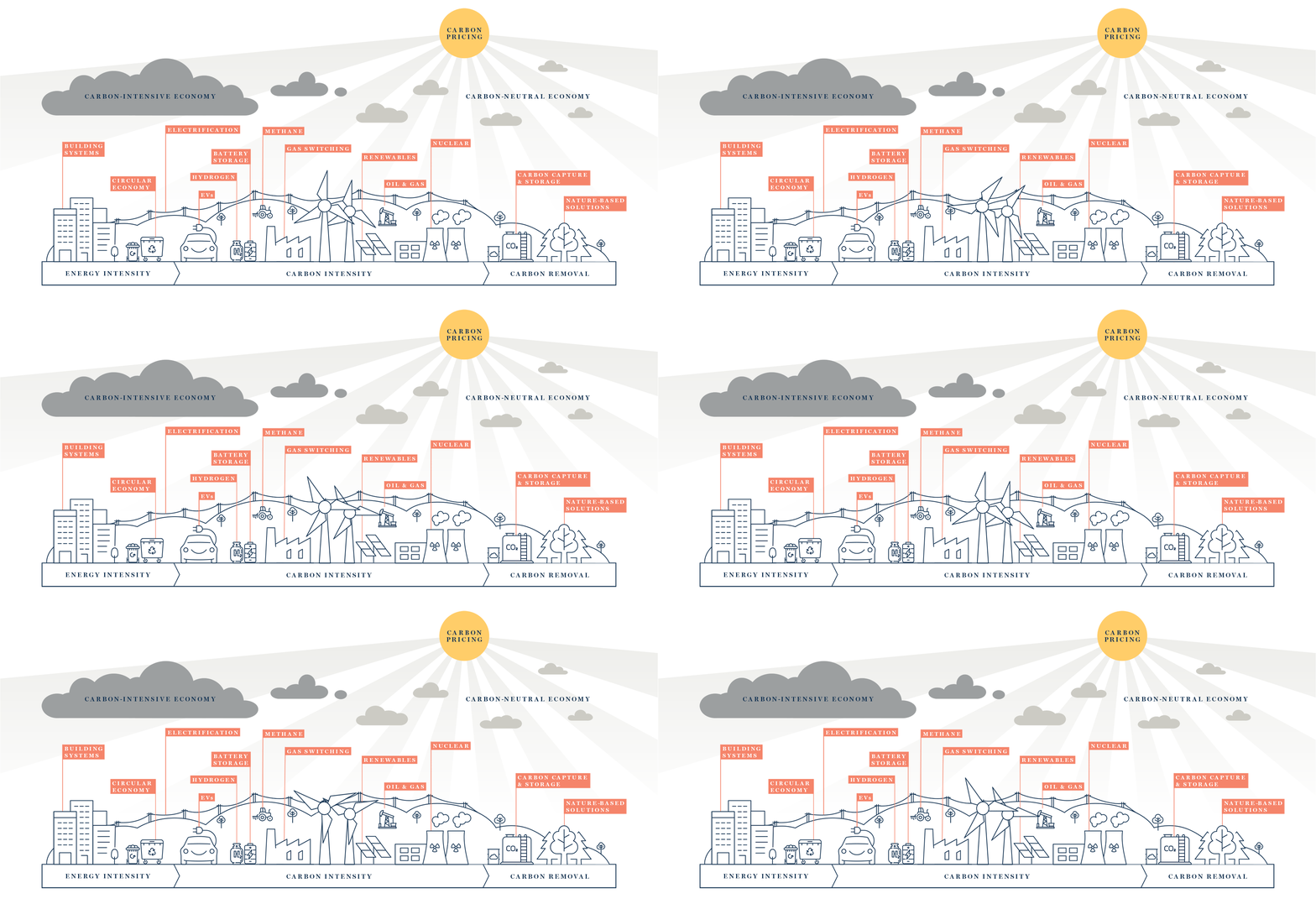
Today, carbon emissions must be a serious consideration for all investors, particularly those with a long-term perspective. The drive towards decarbonisation is a trend that is reshaping not just the energy industry, but the global economy as a whole. Over the last 18 months, we have been building on our collective knowledge and, in particular, the strategies and technologies that will shape the transition to a lower carbon economy over the coming decades across a wide range of related topics.
The global energy system is too complex to adopt a one-size-fits-all solution to emissions reduction. Whilst a lower carbon world may present some challenges, high-quality companies with the requisite innovation have the opportunity to thrive. Here, we identify how we seek to put this recent work into practice and how it will enhance our analysis going forward.

Key highlights
Fossil fuels have long been the crucial component of the global energy mix. As the world transitions towards a lower-carbon future, is there still a case for long-term investment in oil and gas companies today?

In attempting to decarbonise the world’s energy systems, there is no one-size-fits-all solution. Here, we discuss the role that electrification can play via power generation, electric vehicles, hydrogen and building systems.


Carbon Conclusions
Climate and carbon are themes set to define the investment landscape for generations to come. As long-term investors, how do we ensure that portfolios are best positioned to benefit in this lower-carbon world?

Circular Economy
We have all lived in a world where we “take, make and waste” products. With ever-greater awareness of the flaws of this approach, there is now a determined shift away from this linear economic model towards a more circular economy.

Carbon Pricing
The concept of carbon pricing has been around for some time. However, as climate concerns have moved steadily up the political agenda in recent years, calls to put a price on carbon and charge polluters for emissions have intensified.

Buildings
The construction and day-to-day running of buildings accounts for over 35% of global energy demand. With urbanisation driving construction around the world, how can that environmental bill be managed.

Electric Vehicles
The stars are aligning for electric vehicles, but investors will have to be careful in choosing the right companies to take advantage of investment opportunities that the growth in this sector affords.

Hydrogen
Hydrogen has not quite lived up to its potential as a source of ‘green’ energy. New technology, the ‘renewables’ revolution and global government policy changes look set brighten its long-term prospects.

Battery Storage
A lack of reliability and a mismatch between supply and demand are barriers to greater use of renewable energy. Could battery storage be the answer to this conundrum?

Methane
Methane is well known for its warming effects but could the natural gas helpfully act as a bridge fuel in the transition from fossil fuels to renewables?

Renewables and electrification
After more than a century of dependence on fossil fuels, there are now numerous alternatives that can not only provide the energy required to meet global demand but also reduce carbon emissions. With no quick fix or one-size-fits all approach, how do we get there?

Oil and Gas
What is the role of an oil and gas company today and are these companies still an investable proposition for a long-term, responsible investor?

Nuclear
Nuclear is another area of the energy debate that starkly divides opinion, its advantages understandably obscured by tragic incidents. Yet it remains an important part of the global energy supply today.

Carbon Capture and Storage
The concept of carbon capture and storage has been around since the 1970s and most observers agree that it has a critical role to play in meeting the targets of the Paris Agreement. So why is investment in this vitally important technology still lagging?
Important Information
This article is provided for general information only and should not be construed as investment advice or a recommendation. This information does not represent and must not be construed as an offer or a solicitation of an offer to buy or sell securities, commodities and/or any other financial instruments or products. This document may not be used for the purpose of an offer or solicitation in any jurisdiction or in any circumstances in which such an offer or solicitation is unlawful or not authorised.
Stock Examples
The information provided in this article relating to stock examples should not be considered a recommendation to buy or sell any particular security. Any examples discussed are given in the context of the theme being explored.