

Land of opportunity? On the road in India

For use by institutional investors only. Not for use with the general public.
Key takeaways:
- India offers significant potential for overseas companies, but meaningful barriers to success remain
- Mastering a complex distribution ecosystem is vital for brand penetration
- The drive for energy efficiency and security is creating structural opportunities
In book three of The Histories, the Greek historian Herodotus offered one of the earliest recorded glimpses of India. Among the more fantastical stories is a tale of “great ants… bigger than foxes”, whose burrowing unearthed gold-laden sand gathered by locals in daring early-morning raids.
However fanciful his account – Herodotus never actually set foot in the region – this vision of India as a place of exotic custom and abundant wealth established a precedent. For centuries, from Marco Polo’s descriptions of the bountiful “gems and pearls” of the Pandya kingdom to Robert Clive’s astonishment at the “inexhaustible” treasury of Bengal, accounts of India would invariably involve lyrical evocations of its extravagant riches.
While it would be stretching a point to compare today’s corporate leaders to the intrepid Signor Polo – still more so the “problematic” first British governor of the Bengal Presidency – there are, nonetheless, faint echoes of the Venetian’s awe in the Indian observations of many developed market CEOs. Bank of America’s CEO Brian Moynihan neatly captured the prevailing C‑suite vibe when describing India as a “land of opportunity”.
It’s easy to see why management teams are so excited. The fastest growing of the major economies, with a pro-business leader and a large, educated workforce, India’s long-term growth narrative is compelling. And which company wouldn’t want to succeed in a market with almost 20% of the world’s population?
Leader of the pack
India’s expected real GDP growth rate continues to outstrip other large economies
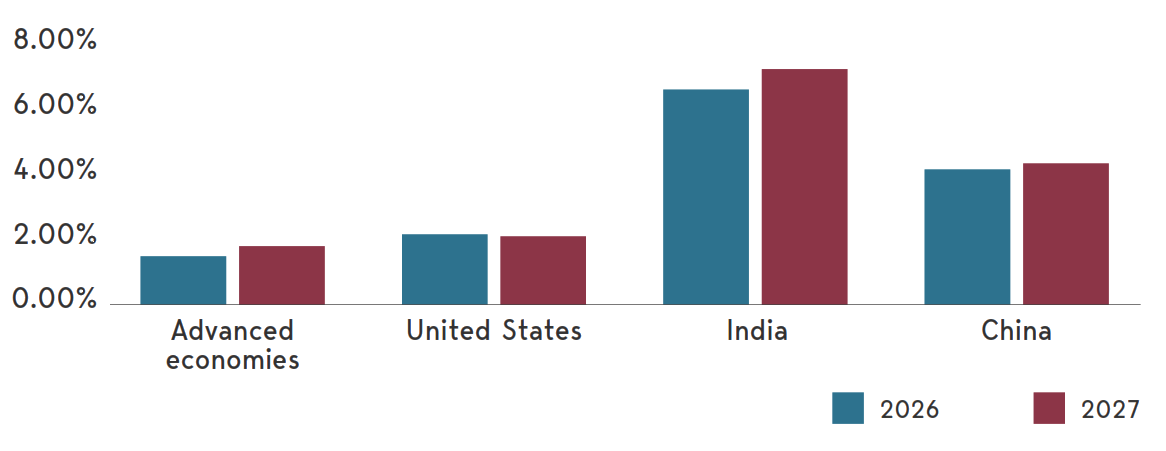
Source: World Bank Global Economic Prospects, June 2026
Yet, the distinctive challenges of the Indian market mean that identifying opportunities is often easier than capturing them. Many an overseas company has had to row back on grand ambitions or withdraw altogether. High-profile casualties include General Motors and Ford, both of which were forced to call time on their Indian aspirations.
My recent visit to five of India’s largest cities was a chance to explore these dynamics firsthand. Travelling around the country, it is impossible not to be struck by its huge potential, although time spent in another interminable traffic jam serves as a useful reminder of its still-significant challenges. For those companies that can overcome these hurdles, however, the potential rewards are substantial.
Distribution is a killer app
Spend any time on the ground in India and the importance of distribution quickly comes into focus. The country’s sheer scale, combined with a highly fragmented commercial landscape, makes complexity an inescapable part of doing business. Little wonder so many companies I spoke with were keen to talk up their distribution capabilities.
Building a nationwide presence in India requires years of painstaking investment. Many domestic incumbents consider this a strategic asset rather than a cost centre, a core competitive advantage that new entrants find difficult to replicate. Even competitors with superior products can struggle to gain traction without the necessary logistics infrastructure.
There are lessons here for overseas brands hoping to win a share of the Indian consumption story, where several tailwinds, from rising incomes to demographics and premiumisation, are driving growth. To compete successfully, however, products need to be physically available across large swathes of the retail ecosystem. While e-commerce is helping (more on this later), distribution at scale remains essential.
A common solution is partnership rather than direct entry. Several successful international consumer businesses have concluded that local distribution expertise is more valuable than sole ownership of the route-to-market. Joint ventures and strategic partnerships can provide access to established distribution infrastructure, local market knowledge and existing retailer relationships that would otherwise take years to build.
Inditex is a case in point. Rather than attempting to independently build a nationwide network, the Zara owner entered India through a partnership with the Tata Group conglomerate. By providing local expertise, market access and operational capabilities, the arrangement accelerated expansion while reducing execution risk.
The success of the Zara business in India highlights the value of combining a strong global brand with a capable local partner. Collaboration, rather than control, may prove a more efficient – and more profitable – route to growth.
E-commerce to the rescue?
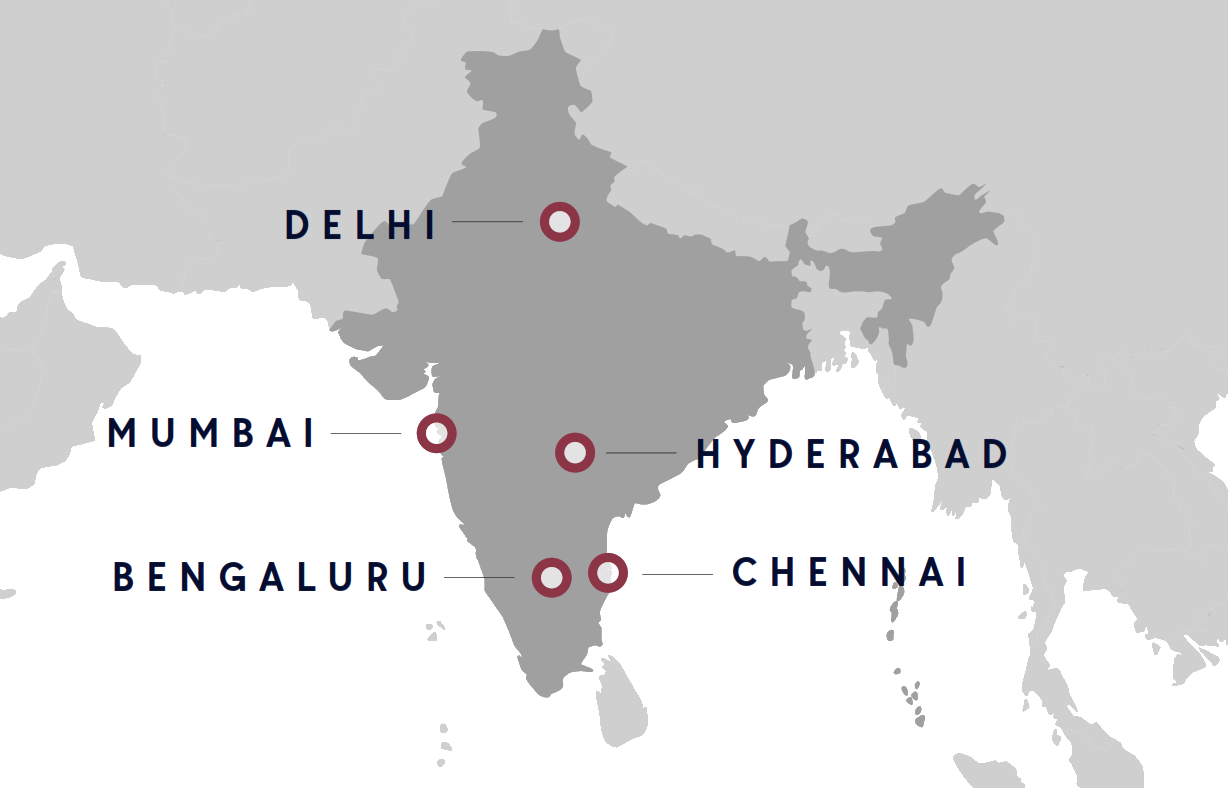
If physical distribution is one of India's enduring business challenges, e-commerce and, increasingly, quick commerce, offer part of the solution. Across the likes of Mumbai, Delhi, and Bengaluru, the number of delivery riders moving through traffic on electric motorbikes has risen dramatically since I last visited India in 2024.
This extends well beyond a simple retail story. The rise of online commerce necessitates the creation of an entirely new distribution layer within one of the world’s largest consumer markets, creating opportunities for companies that can help merchants navigate India’s complex logistics landscape. Dense population centres, improving digital infrastructure and relatively low labour costs make rapid fulfilment models more viable than in many developed markets.
Finger clicking good
The Indian e-commerce ecosystem is expected to treble in size by 2030
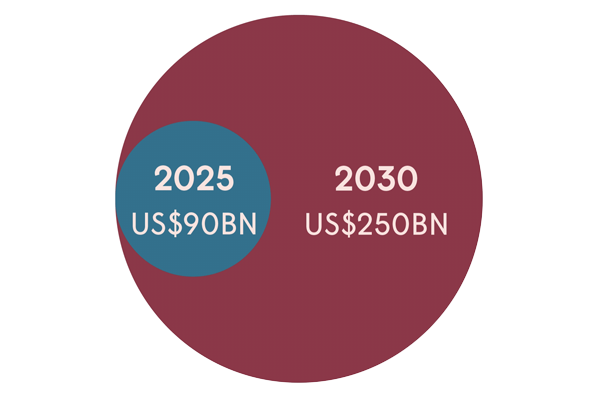
Source: Deloitte, April 2026
This is exactly the kind of environment in which Amazon should prosper. India possesses many of the characteristics that have historically favoured its model: a large addressable consumer base, fragmented retail infrastructure and significant opportunities to improve selection, convenience and fulfilment.
Despite intense competition, India remains a strategically important market for Amazon and while profitability is likely to remain secondary to market development for some time, the long-term opportunity is substantial. Every improvement in logistics infrastructure expands the range of products that can be sold online, increasing the allure of Amazon’s platform for both consumers and merchants.
Powering India's growth
The question of how to power India’s rapid growth has become an increasingly urgent one in recent months. Events in the Middle East have exposed a perilous reliance on imported hydrocarbons; around nine of every 10 barrels of oil consumed comes from overseas.
Tackling this dependence is now front of mind for the Indian government, which is putting its money where its mouth is by offering fiscal incentives for renewable energy investment. Combined with a drive to upgrade the Indian grid to meet rising power consumption, this domestic energy agenda is creating significant opportunities for developed market players.
By way of example, the country is an increasingly important plank in the strategic plans of French energy management group Schneider Electric. Management believes the country offers a “unique blend of scale, urgency, and potential”. Underlining its long-term commitment, last year the company acquired full control of its Indian joint venture, with the aim of accelerating decision-making to better capture the opportunity in its third-largest market.
Future growth is centred on grid modernisation, renewables and the fast-growing data centre market, areas that align closely with government priorities on infrastructure, efficiency and digitalisation. Supported by ongoing investment in R&D and capacity, this positioning is helping to sustain strong revenue momentum.
Schneider has identified three megatrends that will shape its strategic priorities and define long-term growth: new energy landscape, digitalisation and AI, and a multi-polar world. Each is likely to have a profound impact on the trajectory of the Indian economy, creating durable demand for the companies that can help facilitate them.
Adapt to thrive
For Schneider and other developed market companies, India’s scale, dynamism and structural tailwinds present a potent opportunity set. Yet the gap between potential and realised returns is not easily bridged. Success depends as much on execution as it does on a compelling product or service. In a vast and complex market, the ability to adapt established operating models to on-the-ground realities will be a genuine differentiator.
Important Information
This article is provided for general information only and should not be construed as investment advice or a recommendation. This information does not represent and must not be construed as an offer or a solicitation of an offer to buy or sell securities, commodities and/or any other financial instruments or products. This document may not be used for the purpose of an offer or solicitation in any jurisdiction or in any circumstances in which such an offer or solicitation is unlawful or not authorised.
Stock Examples
The information provided in this article relating to stock examples should not be considered a recommendation to buy or sell any particular security. Any examples discussed are given in the context of the theme being explored.